For video cinema production, the decision is not simply between two Pocket Cinema Camera 4K configurations. One pairs the camera body with a named Lumix 1.7/20mm component, while the other includes a MagicRig Cage and one battery. With just a $21 listed-price spread, the accessories, power situation, and stated USB-C concern should drive the choice.
Quick verdict
Pick the Blackmagic Design Pocket Cinema Camera 4K Body W Lumix 1.7/20mm when the named Lumix component, touchscreen-related features, and multiple listed media formats suit the setup you want to assemble. Its clear drawback is that the battery is missing.
Pick the Blackmagic Design Pocket Cinema Camera 4K with MagicRig Cage when having the included MagicRig Cage and one battery is the priority. However, USB-C is described as not seeming to work for SSD recording, so it is a less suitable match when that connection is central to your planned workflow.
At a glance
| Comparison point | Pocket Cinema Camera 4K Body W Lumix 1.7/20mm | Pocket Cinema Camera 4K with MagicRig Cage |
|---|---|---|
| Listed price | USD 699.00 | USD 720.00 |
| Named configuration | Lumix 1.7/20mm | MagicRig Cage |
| Power details | Battery missing | One lithium-ion battery included; no charger |
| Notable listed details | Bluetooth, HDR, built-in microphone, LCD touchscreen, time lapse | 4K maximum resolution; mirrorless interchangeable-lens type |
Where each configuration fits best
The Lumix 1.7/20mm configuration fits a lens-included starting point. The title specifically names the Lumix 1.7/20mm, which gives this option a clearly identified camera-and-lens combination. It also lists CFast 2.0, Flash Drive (SSD), SDHC/SD, and SDXC/SDHC/SD as media formats, alongside Bluetooth, HDR, a built-in microphone, an LCD screen, touch controls, and time lapse.
The MagicRig Cage configuration fits a cage-focused build. Its title identifies the MagicRig Cage, and the package description includes the camera body and one battery. That makes it the direct choice when those two included items are more important than the Lumix component named with the other configuration. The absent charger and stated USB-C concern are meaningful tradeoffs.
Blackmagic Design Pocket Cinema Camera 4K Body W Lumix 1.7/20mm
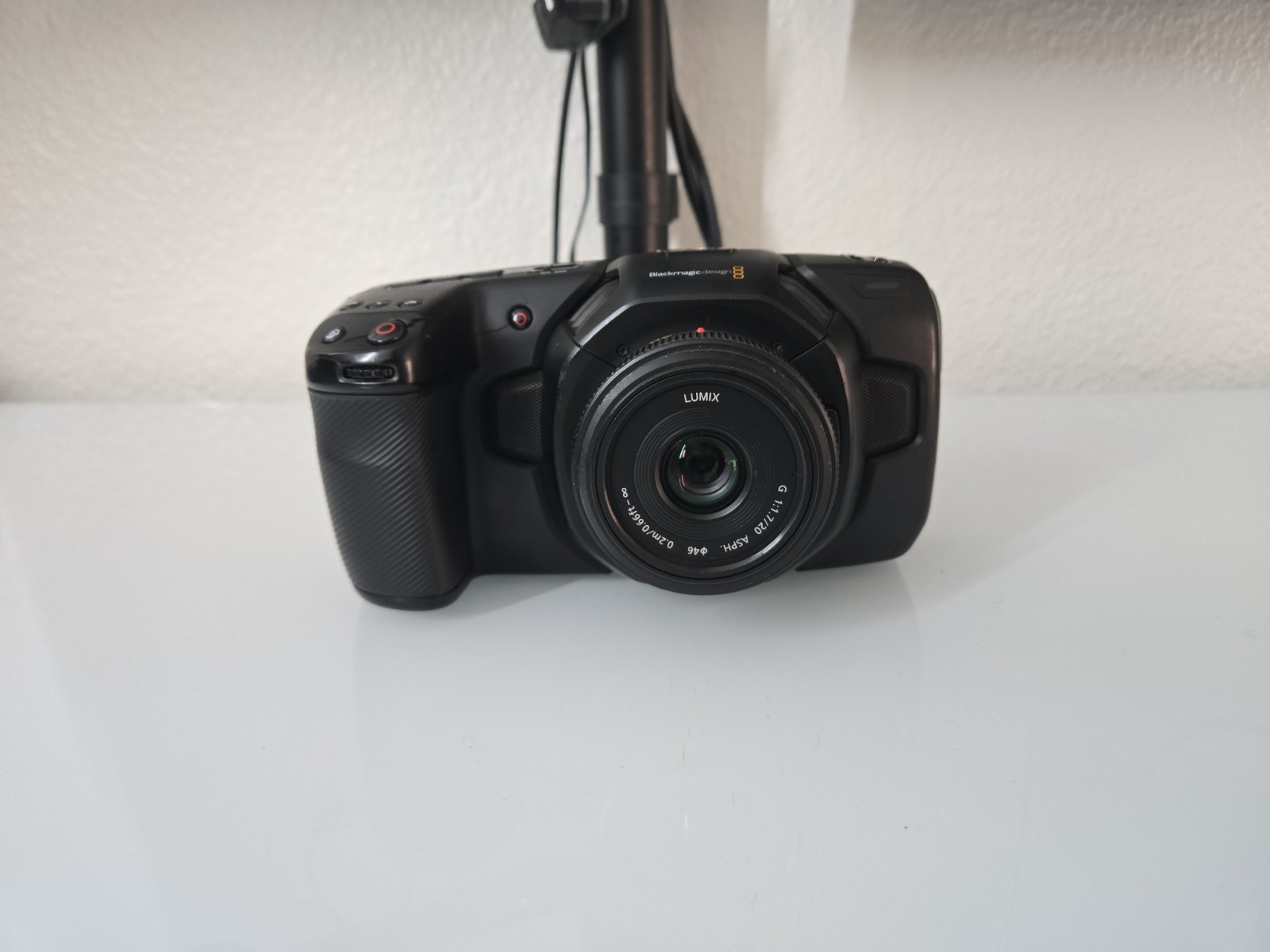
The Blackmagic Design Pocket Cinema Camera 4K Body W Lumix 1.7/20mm is the stronger match for a shopper who wants the named Lumix 1.7/20mm included in the configuration rather than starting with a body-and-cage emphasis. Beyond that title detail, its listed feature set includes Bluetooth, High Dynamic Range (HDR), a built-in microphone, LCD screen, touch screen, and time lapse. The listed media options also span CFast 2.0, Flash Drive (SSD), SDHC/SD, and SDXC/SDHC/SD. Choose this configuration for the named lens pairing and its broader stated feature list. Its key limitation is straightforward: the description says the battery is missing, so the included setup does not provide a battery.
Blackmagic Design Pocket Cinema Camera 4K with MagicRig Cage
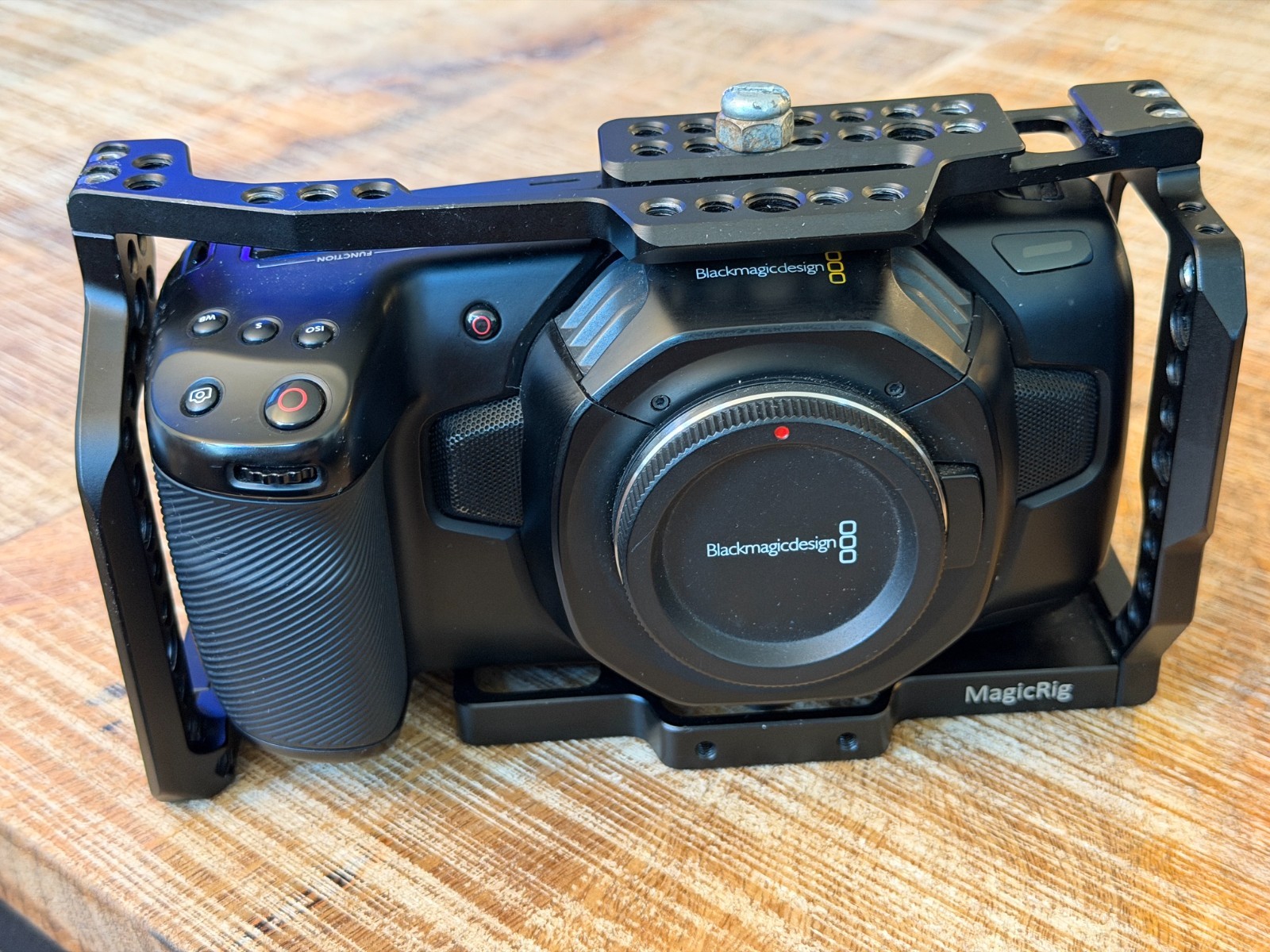
The Blackmagic Design Pocket Cinema Camera 4K with MagicRig Cage makes the clearest case for buyers who specifically want a camera body paired with the named MagicRig Cage. The description includes one battery, and the attributes identify a lithium-ion battery type, providing a different power starting point from the Lumix configuration. It is also listed as a 4K mirrorless interchangeable-lens camera. Choose this configuration when the cage and included battery are more useful to your intended build than the Lumix 1.7/20mm named by the other option. The limitation is the USB-C issue described for SSD recording, and the charger is not included.
Final choice by use case
Choose the Pocket Cinema Camera 4K Body W Lumix 1.7/20mm for a setup centered on the named Lumix component, touchscreen-related features, and its listed CFast, SSD, and SD media formats-provided the missing battery fits your plan.
Choose the Pocket Cinema Camera 4K with MagicRig Cage for an included cage and one battery, particularly when those package elements matter more than the Lumix pairing. For SSD-recording-focused use, the described USB-C issue makes the Lumix configuration the more straightforward direction.